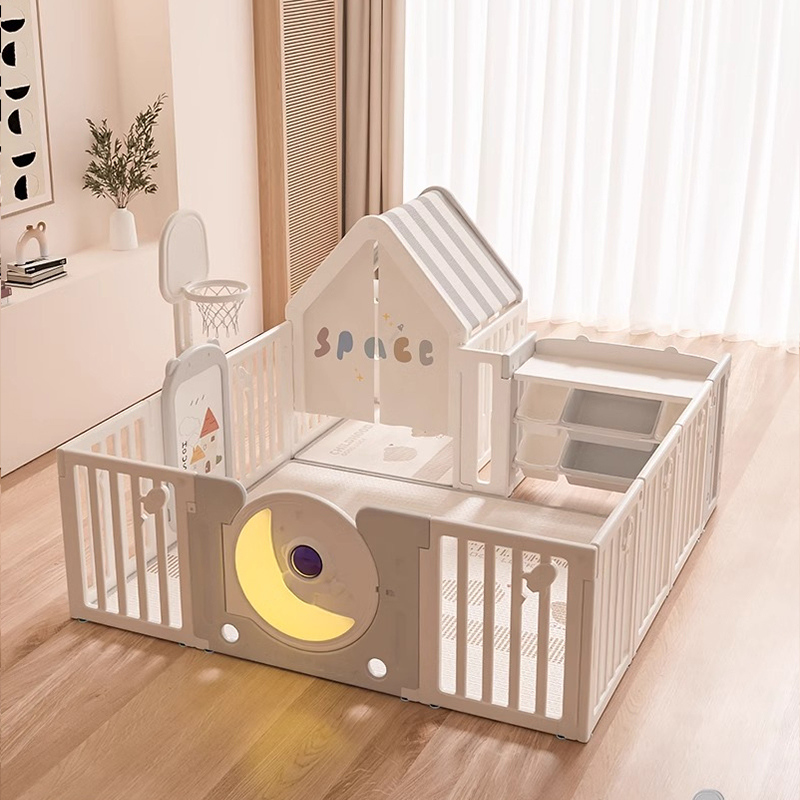
Introduction: The High-Stakes Reality of Selling Baby Products on Amazon
Selling baby products on Amazon offers incredible scaling potential, but it comes with a zero-tolerance policy for compliance and quality errors. Among all nursery categories, baby playfences (infant playpens) face some of the highest rates of listing suppressions, customs seizures, and safety-related customer complaints. One missing certificate or a single structural defect can lead to devastating inventory blocks, costly product recalls, or permanent account suspension.
For Amazon FBA sellers, managing sourcing risk is not just about finding the lowest price—it is about securing your brand's operational safety. This guide breaks down the essential risk-mitigation framework for sourcing premium baby playfences.
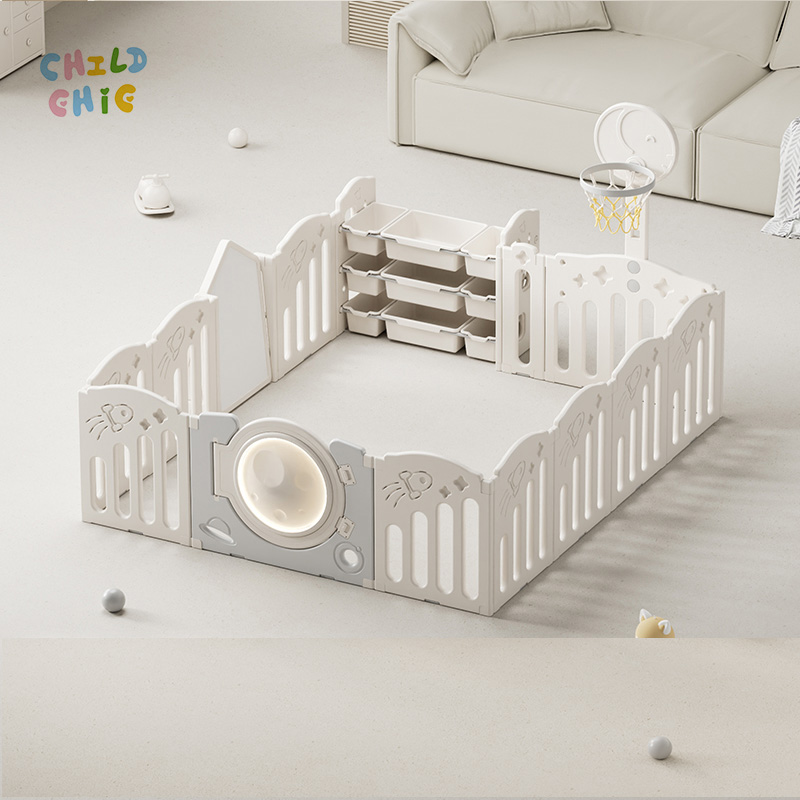
1. Amazon Playfence Risk Assessment Matrix
Before wiring a deposit to a factory, your product compliance team should benchmark prospective suppliers against this risk-mitigation matrix:
| Sourcing Risk Vectors | High-Risk Tier-3 Workshops | Bopai Low-Risk Certified Manufacturing |
|
Amazon Compliance Audit
|
Fake or poorly translated 3rd-party test reports; high listing suppression risk. | Native, verified CPC (Children's Product Certificate) with genuine lab links. |
|
Chemical Toxicity Risk
|
Uses secondary recycled plastics; fails phthalate or heavy metal leaching tests. | 100% Virgin, food-grade HDPE; strictly complies with CA Prop 65 & CPSIA. |
|
Mechanical Hazard Risk
|
Sharp plastic flashes, uneven gaps causing limb entrapment hazards. | CNC automatic molding; standardized non-entrapment spacing & smooth edges. |
|
Supply Chain Disruptions
|
Fragile production capacity, high defect rates leading to Amazon FBA stockouts. | Massive economies of scale, strict inline QC, stable monthly multi-container output. |
Step 1: Mitigating Regulatory and Certification Risks
Amazon does not merely ask for safety certificates; their automated compliance bots routinely audit the validity of test reports against the CPSC (Consumer Product Safety Commission) accepted laboratory database.
- The Sourcing Standard: When sourcing baby playfences for the US market, your manufacturer must supply a verified CPC (Children's Product Certificate) backed by an approved third-party laboratory (such as SGS, TÜV, or Intertek) testing for ASTM F963-17. For European marketplaces, valid CE markings and EN71 certificates are mandatory.
- The Risk Solution: Premium factories like Wenzhou Bopai hold direct, verified factory-level certificates. We proactively refresh our testing documentation, ensuring your listing passes Amazon's performance audits instantly without triggering a "Product Safety Issue" flag.
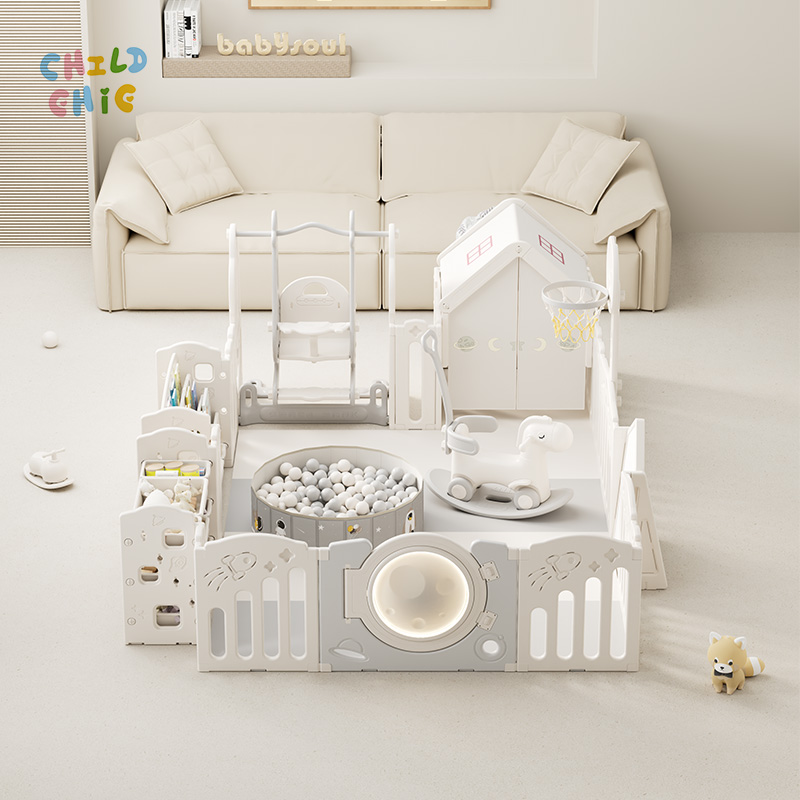
Step 2: Eliminating Structural Defect and Injury Risks
A single negative 1-star review claiming a baby was injured can permanently ruin an Amazon Listing's organic ranking.
Preventing Limb Entrapment & Sharp Edges
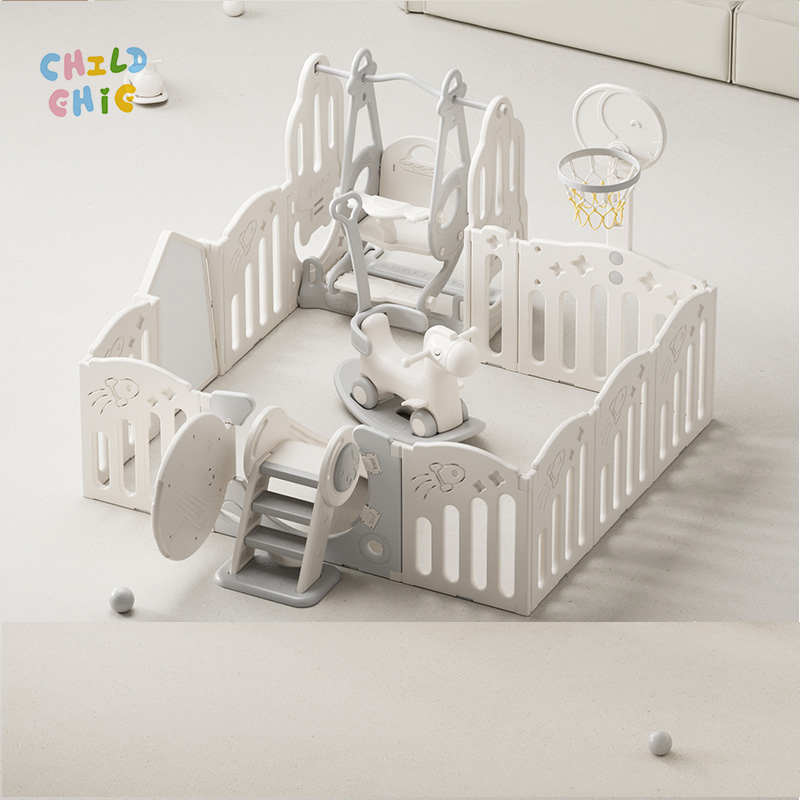
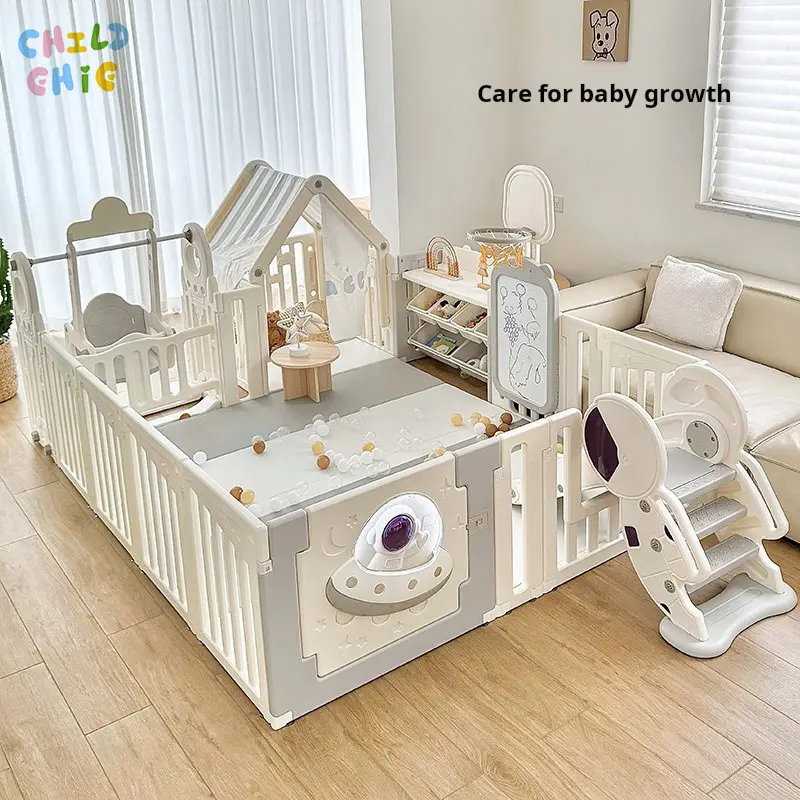
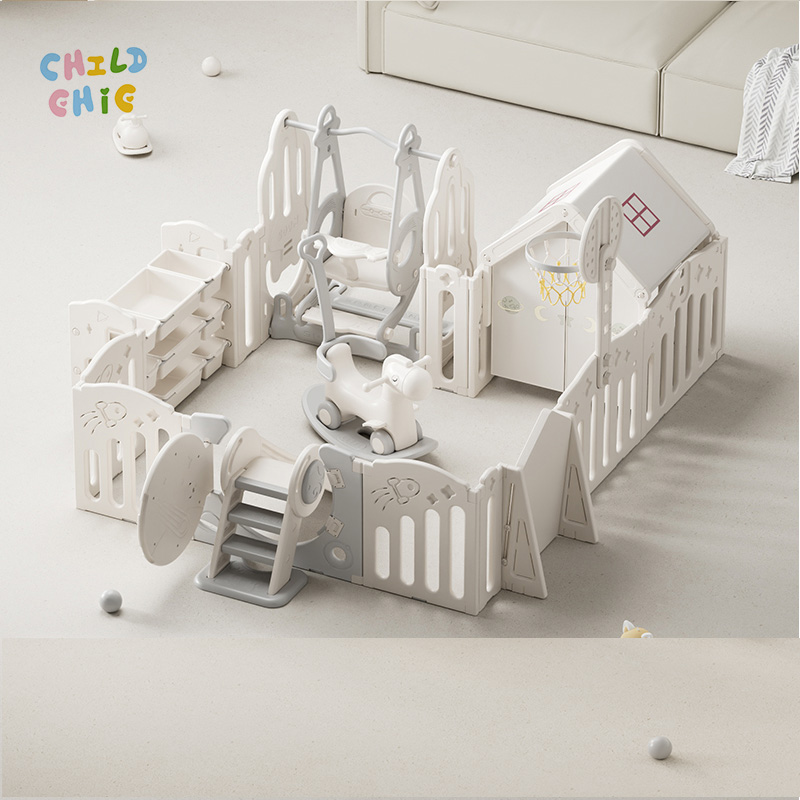
According to global safety protocols, the spacing between fence panels must be mathematically engineered to prevent head or limb entrapment. Cheap manual factories often have warping issues that alter panel spacing during batch production. High-end suppliers solve this by utilizing heavy-duty CNC automatic blow molding equipment. This automated precision guarantees perfect structural alignment, uniform wall thickness, and perfectly deburred, skin-friendly edge finishes across thousands of units.
Enforcing Gate Security and Floor Traction
Millennial parents track product reviews closely. If a toddler learns to flip the lock from inside or slides the fence across the floor, you will face an influx of Amazon returns. Your risk checklist must mandate an external-only safety lock and upgraded heavy-duty TPR suction cups at the base. This ensures maximum floor traction on both hardwood and tile surfaces, preventing the structure from shaking or tipping.
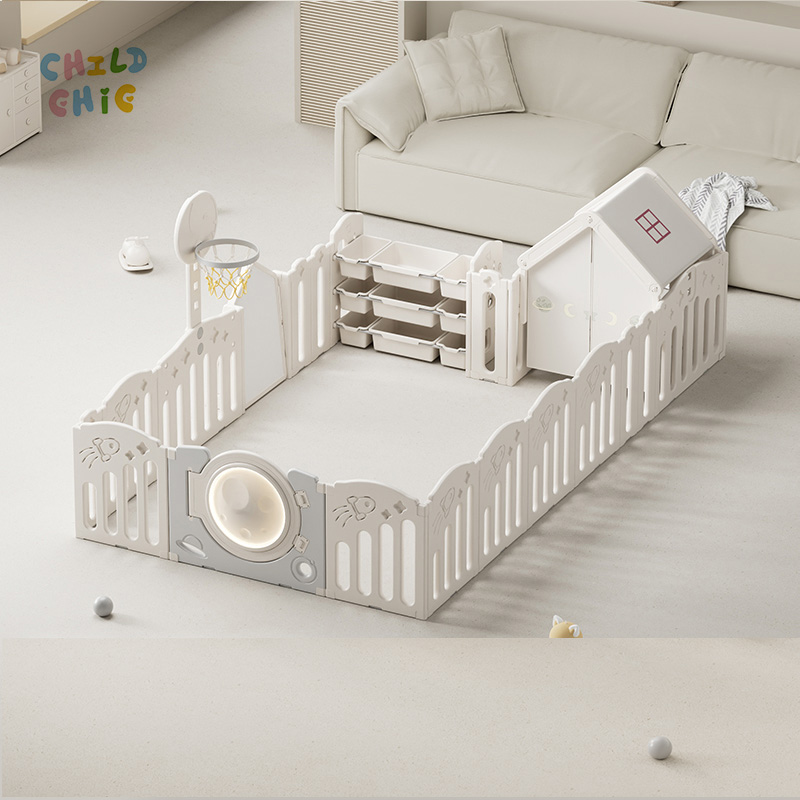
Step 3: Optimizing Logistics and Avoiding FBA OOS (Out of Stock)
On Amazon, staying in stock is vital for maintaining your organic BSR (Best Sellers Rank). Fragmented boutique factories often suffer from volatile lead times, causing unexpected stockouts during high-traffic Q4 shopping seasons.
Furthermore, unoptimized bulky packaging will double your Amazon FBA storage fees. Partnering with a manufacturer that implements flat-pack structural engineering is a vital risk-mitigation strategy. By minimizing dead air space inside the retail cartons, you can fit more units into a 40HQ container, significantly lowering your per-unit international ocean freight costs and expanding your net profit margins.
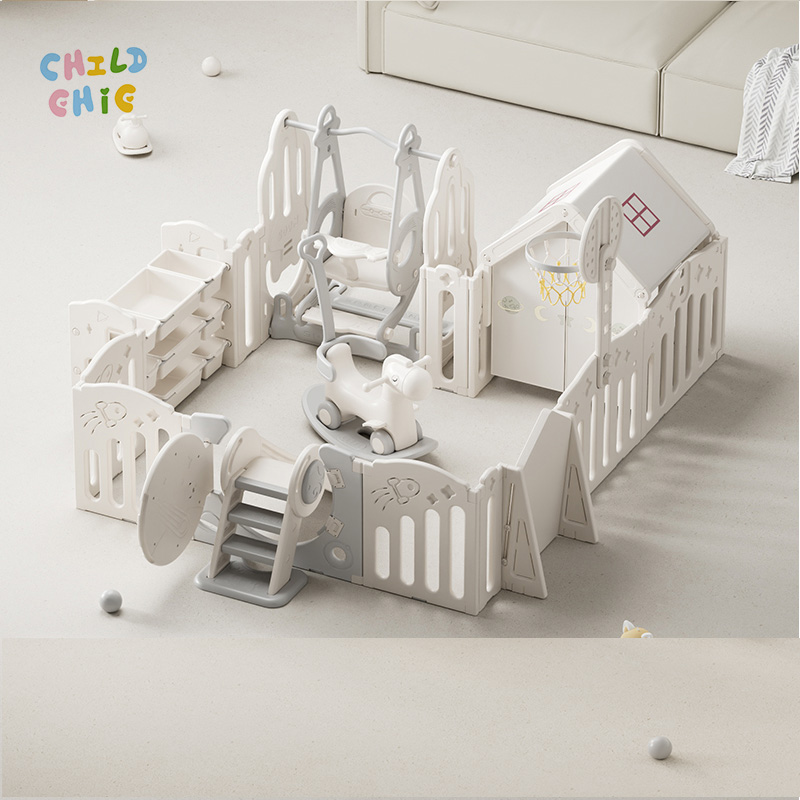
Conclusion: Secure Your Brand’s Asset with Wenzhou Bopai Playfences
Risk management is the ultimate competitive advantage in the 2026 e-commerce landscape. By partnering with Wenzhou Bopai Baby & Kids Products Co., Ltd., you secure an elite manufacturing backbone that delivers premium, diverse categories (Playfences, Kids' Cabinets, Slides, and Swings) under comprehensive global certifications (BSCI, ISO9001, ASTM, EN71, CE, CPC). We protect your supply chain so you can focus on driving traffic.
Looking to protect your Amazon store from compliance strikes? Contact our international sourcingdesk today for a direct quote and verified certificate dossier!
🌐 FAQ
Q1: What is Bopai's main product range?
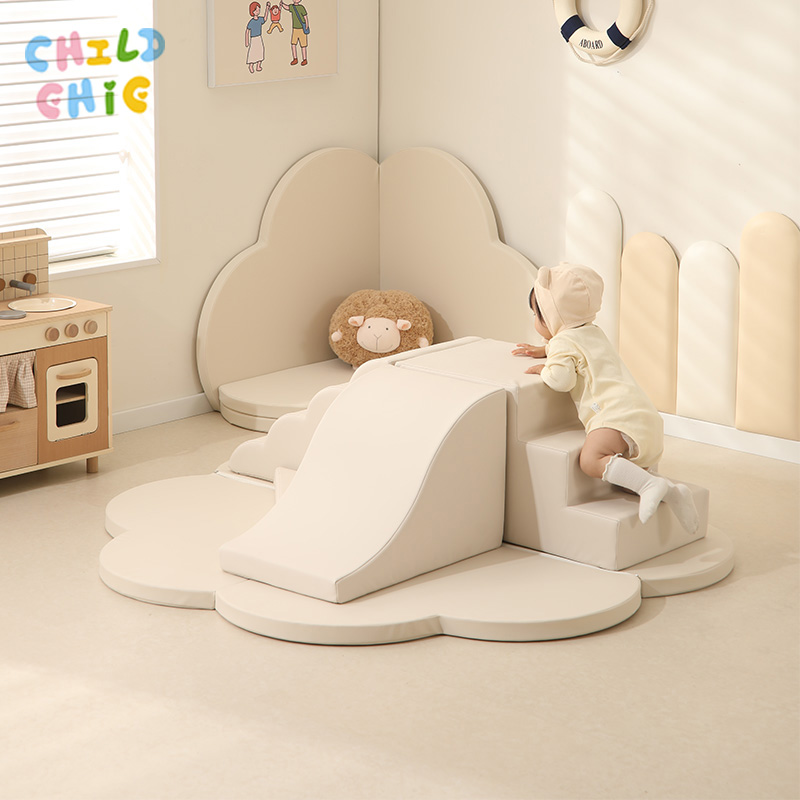
• EN: We manufacture baby playpens, indoor slides, swings, rocking horses, ball pits, toy storage racks, children's tables & chairs, soft foam climbing facilities, and basketball hoops.
Q2: Do you support OEM/ODM and private labeling?
• EN: Yes. We offer full customization on colors, sizes, panel textures, logo printing/embossing, and custom packaging.
Q3: What quality and safety certificates do you have?
• EN: Our factory is BSCI and ISO9001 certified. All products comply with ASTM F963, EN71, CE, and CPC standards.
Q4: How do you ensure product quality?
• EN: We use high-end CNC automatic blow molding machinery for uniform thickness and smooth edges, combined with a strict multi-stage internal QC process.
Q5: What is your MOQ and lead time?
• EN: Standard items require 50-100 units per order. Production lead time is typically 25-35 days after deposit and design approval.
Q6: How do you pack products to save shipping costs?
• EN: Most bulky items use optimized flat-pack shipping. This modular design reduces package volume and lowers your per-unit freight costs.